US-China Biotech Competition
For decades, the United States and its Western allies held an unrivaled grip on global biotech innovation. The assumption, largely unchallenged until recently, was that breakthrough science happened in the West, and the rest of the world followed. With China's rise over the past decade, that assumption is now under serious strain. As of Q1 2026, approximately 30% of the world's novel drug candidates are being developed by Chinese-headquartered companies, a 500% increase in innovation volume over the last decade. Former FDA Commissioner Marty Makary has publicly acknowledged the shift, calling out the United States' comparative lag with China in early-stage drug development and clinical trials.
China's Systemic Shift to Advance Innovation
Beijing has made a deliberate, state-directed push to claim the center of global biotech as part of a broader ambition to lead the world economy. Investment efforts began in earnest with the State Council's landmark Made in China 2025 policy, which explicitly prioritized the development of new chemical drugs, antibodies, antibody-drug conjugates, protein and polypeptide drugs, vaccines, personalized medicines, and medical devices. The following year's 13th Five-Year Plan doubled down, calling for large-scale development of personalized medicine, new drugs, and next-generation biotech products by 2021. Coordinated infrastructure investments in laboratories, technology parks, and academic research launched China as a rapidly growing biotech epicenter.
Underpinning this shift is a structural advantage that has been quietly building: Chinese companies can develop drugs faster and more cheaply than their Western counterparts. Startups can go from launch to clinical trials in 18 months or less, a process that takes several years in the U.S. This is due to lower labor costs, a vast domestic patient pool for clinical recruitment, and leaner supply chains. Beyond speed, Chinese firms are increasingly pursuing genuinely novel drug targets, staking out first-mover positions in therapeutic areas that Western companies have yet to fully explore.
A critical regulatory development accelerated this trajectory. China's National Medical Products Administration (NMPA) fully adopted International Council for Harmonization (ICH) guidelines, aligning its standards with those used by the FDA and European Medicines Agency (EMA). The practical effect was significant: clinical trial data generated in China could now support regulatory filings globally, dramatically lowering the barriers to commercialization and unlocking cross-border partnerships that had previously been difficult to structure. As a result, China's share of global pharmaceutical out-licensing deal value jumped from 8% in 2021 to 32% in early 2025, as Chinese firms repositioned from generics manufacturers to producers of genuinely competitive, often best-in-class medicines.
The Response from US Lawmakers and Industry
U.S. and European pharmaceutical giants face a patent cliff threatening over $200 billion in annual revenue by 2030 and have increasingly turned to China to replenish their pipelines. In 2025 alone, big pharma completed 18 in-licensing and asset purchase deals from Chinese companies with $50 million or more in upfront payments, totaling $57.3 billion in deal value. The headline transactions underscore just how far perceptions of Chinese biotech quality have shifted, with Pfizer committed up to $6 billion for rights to 3SBio's cancer immunotherapy and GSK signed a broad alliance with Jiangsu Hengrui worth up to $12 billion covering roughly a dozen oncology programs. As China's biotech ambitions have become impossible to ignore, U.S. lawmakers have pursued a two-track strategy: building guardrails against Chinese influence in the domestic supply chain while pushing to streamline the American drug development process.
The most significant legislative action came in December 2025, when President Trump signed the BIOSECURE Act into law as part of the FY2026 National Defense Authorization Act (NDAA). The Act restricts U.S. executive agencies from contracting with or funding companies designated as "Biotechnology Companies of Concern," targeting foreign-adversary-linked suppliers across genomics, data analytics, and biomanufacturing, with OMB required to publish a full list of designated entities by December 2026.
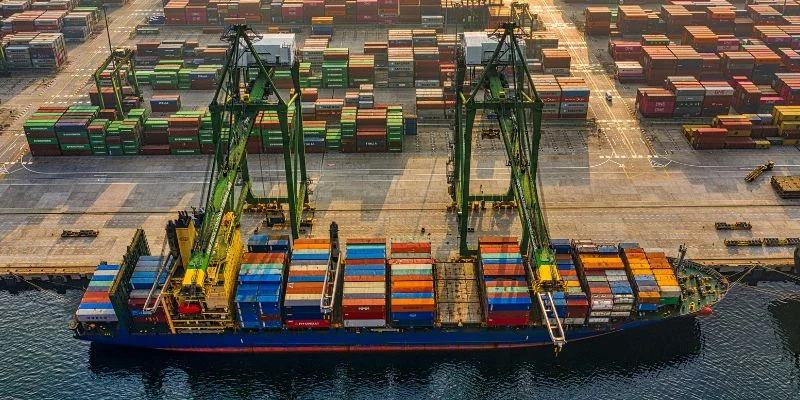
On the trade front, the Trump administration paired this with an aggressive tariff strategy. Following a Section 232 national security investigation, it announced 100% levies on imported branded pharmaceuticals in April 2026, with generic drugs and biosimilars exempt for now. The policy was structured as a tiered system to reward cooperation: companies that entered both onshoring agreements with the Department of Commerce and Most Favored Nation pricing agreements with HHS face a 0% tariff through January 2029, while those with onshoring agreements alone are subject to a reduced 20% rate, escalating back to 100% by April 2030. The impending tariffs have already spurred approximately $400 billion in new investment commitments from U.S. and foreign pharmaceutical companies to be spent domestically during President Trump's current term. The tariff strategy, however, has drawn sharp criticism. The Biotechnology Innovation Organization warned that the measures "threaten America's health, national security, economic stability, and its place as the world's leader in biotechnology", particularly for the 3,000+ small and midsized biotech firms developing rare disease treatments that lack the scale to reshore manufacturing. Independent analysts have noted that the economic impact on China may prove negligible, since it exports relatively little in branded pharmaceuticals to the U.S.
On the regulatory side, former FDA Commissioner Makary announced a shift to a single pivotal trial as the new default standard for drug approvals. This change is intended to compress timelines and reduce capital costs in a process that currently takes an average of seven years from development to market. The single-trial standard is expected to substantially reduce both costs and timelines, with a single pivotal study estimated to cost between $30 million and $150 million. The FDA has also introduced a "plausible mechanism" framework to expedite approvals for rare disease drugs. In June 2025, it went further still, halting clinical trials that would ship Americans' cells and biological materials to hostile countries, citing national security concerns.
Looking Ahead
The United States enters this competition with the world's deepest private capital markets, a mature regulatory framework, and a university research ecosystem that has underpinned nearly every major biomedical breakthrough of the past half-century. But those advantages are being tested at precisely the wrong moment. Over 3,500 FDA jobs have been eliminated, and the administration's 2026 budget proposes a further 37% cut to NIH funding. The consequences are already visible: at top-tier research centers including Johns Hopkins, Harvard Medical School, and Fred Hutchinson Cancer Center, labs have closed, jobs have been eliminated, and clinical trials have been paused. Given that nearly every drug approved between 2010 and 2019 stemmed in some way from NIH-funded research, cuts to basic science are not a trimming of bureaucratic fat — they are a direct tax on future innovation. China, meanwhile, is accelerating investment in basic research, clinical infrastructure, and regulatory capacity. The U.S. can still compete through smart regulatory reform, targeted industrial policy, and the strength of its private sector, but erecting trade barriers with one hand while dismantling the research infrastructure that justifies American leadership with the other is not a strategy for winning a biotech race.