
PFAS and CERCLA: Understanding the Passive Receiver Exemption
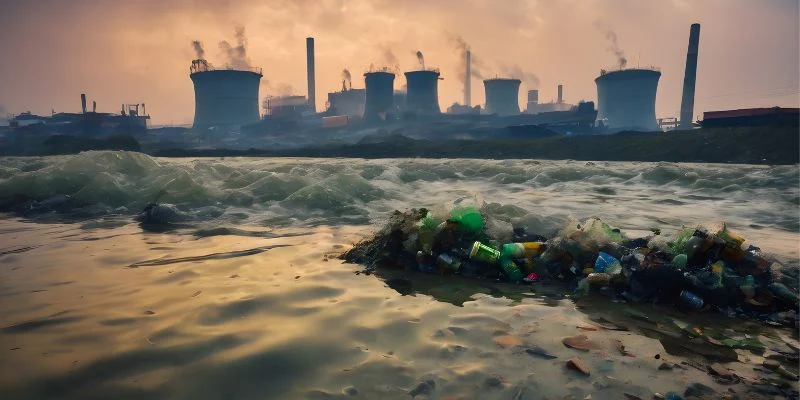
Per- and polyfluoroalkyl substances — commonly known as PFAS — have become one of the most consequential environmental liability issues in the United States. As federal regulators classify certain PFAS as hazardous substances under the Comprehensive Environmental Response, Compensation, and Liability Act (CERCLA), a critical question faces thousands of municipalities, utilities, and farmers: Could we be held responsible for contamination we did not cause? For many, the answer lies in the passive receiver exemption.
What Are PFAS?
PFAS are a large group of synthetic chemicals used since the 1940s in products ranging from non-stick cookware and food packaging to firefighting foam and industrial lubricants. Their extraordinary chemical stability makes them highly resistant to environmental breakdown, earning the designation “forever chemicals.” They are now detected in groundwater, soil, and drinking water systems nationwide. According to the Agency for Toxic Substances and Disease Registry (ATSDR), epidemiological evidence associates certain PFAS — particularly PFOA and PFOS — with increased cholesterol, lower vaccine response, kidney and testicular cancer, and pregnancy complications. The EPA also summarises links to immune disruption, developmental harm in children, and elevated cancer risk.
What Is CERCLA?
CERCLA — also known as Superfund — was enacted in 1980 to address contaminated sites and assign cleanup responsibility. It imposes strict, joint and several liability on four categories of potentially responsible parties (PRPs): current and former site owners and operators, parties who arranged for the disposal of hazardous substances, and transporters. This standard is powerful and unforgiving: any single PRP can be held liable for the full cost of cleanup, regardless of how small their contribution to the contamination. More on CERCLA’s framework is available at EPA’s Superfund page.
The Hazardous Substance Designation: Linking PFAS to CERCLA
CERCLA’s liability framework applies only to designated “hazardous substances.” In April 2024, the EPA finalised a rule designating PFOA and PFOS as CERCLA hazardous substances — the first time in the law’s history that a chemical was added through formal rulemaking. The final rule was published in the Federal Register on May 8, 2024, and took effect July 8, 2024. The EPA’s designation page outlines reporting requirements and its concurrent enforcement discretion policy. The EPA has signalled that additional PFAS designations may follow.
What Is a Passive Receiver?
A passive receiver is an entity that receives PFAS-containing materials, such as biosolids, wastewater, or stormwater, without knowledge of the PFAS content and without any role in generating those substances. Common examples include:
• Wastewater treatment plants that received PFAS-laden industrial or residential effluent
• Farmers who applied biosolids as fertiliser under EPA-approved programs
• Public water systems that received contaminated source water from upstream dischargers
• Landowners adjacent to military installations where firefighting foam was used
• Solid waste utilities that receive PFAS-containing products through waste collection
In each case, the entity participated in a regulated, government-sanctioned activity. The passive receiver is the recipient of upstream contamination — not a contributor to it.
Why the Passive Receiver Exemption Matters
The proposed exemption would shield qualifying entities from CERCLA liability when they received PFAS through lawful activity, did not manufacture or knowingly use PFAS, and did not actively contribute to contamination. Without this protection, municipalities, utilities, and agricultural operators face Superfund cleanup costs potentially running into the hundreds of millions of dollars — costs borne by ratepayers and rural communities. A utility complying with its EPA permit should not face liability for contamination introduced by industrial dischargers years earlier.
The passive receiver exemption does not shield chemical manufacturers. Its purpose is to direct CERCLA enforcement toward those who introduced PFAS into commerce — not toward municipalities, essential public utilities, and farmers who had no choice but to receive them.
The Federal Policy Landscape
As of early 2026, a statutory passive receiver exemption has not yet been enacted, but legislative momentum is building. In the 119th Congress, Senator Shelley Moore Capito (R-W.Va.) chairs the Senate Environment and Public Works Committee (EPW), with Senator Sheldon Whitehouse (D-R.I.) as Ranking Member. On November 19, 2025, Chairman Capito convened a hearing on PFAS cleanup and disposal policy, calling for a “permanent statutory solution” modelled on brownfield liability protections enacted in 2002 — when enforcement discretion alone proved insufficient to stop third-party litigation against innocent redevelopers. The hearing also featured testimony from Congressional Research Service attorney Kate Bowers examining how existing CERCLA defences may fall short for passive receivers.
In the House, Chairmen Brett Guthrie (R-Ky.) and Gary Palmer (R-Ala.) of the Energy and Commerce Committee and its Subcommittee on Environment held a parallel hearing on December 18, 2025, with members across both parties expressing concern that CERCLA’s strict liability standard was sweeping in parties with no meaningful role in contamination. The leading legislative vehicle is H.R. 1267, the Water Systems PFAS Liability Protection Act, which would exempt public water systems, treatment works, and municipalities from CERCLA liability for PFAS releases when operating in compliance with applicable law. Additional legislative efforts are attempting to broaden the definition of a passive receiver beyond water utilities to include other public utilities and stakeholders acting in the public interest. Critically, EPA Administrator Lee Zeldin stated in September 2025 that the agency would need new statutory language from Congress to fully protect passive receivers, fully acknowledging that its existing enforcement-discretion policy cannot prevent private cost-recovery suits filed by manufacturers against downstream operators.
A Rare Bipartisan Consensus
The passive receiver exemption is one of the few environmental issues generating genuine agreement across party lines. For Republicans, it is a matter of regulatory fairness: holding entities strictly liable for contamination they could not prevent conflicts with basic principles of personal responsibility, particularly for farmers who applied biosolids at the government’s encouragement. For Democrats, it reinforces the “polluter pays” principle — ensuring CERCLA targets the chemical manufacturers who profited from PFAS, not the water utilities and farms that are themselves victims. As both the Senate EPW hearing record and the House Energy and Commerce hearing record reflect, the shared goal has produced a working coalition spanning rural agricultural states and urban water systems alike. Progressive members have urged careful drafting to avoid unintended loopholes, but the political foundation for a statutory fix is stronger than it has ever been.
Conclusion
For the municipalities, utilities, and landowners that received PFAS through ordinary, lawful activity, the passive receiver exemption is not a legal technicality — it is a fundamental protection. As EPA enforcement intensifies and private litigation grows, passive receivers must document their compliance histories and consult qualified environmental counsel. The statutory fix is within reach, and understanding the legal and legislative landscape is the essential first step. Track H.R. 1267’s progress on Congress.gov and monitor the Senate EPW Committee and House Energy and Commerce Committee for legislative developments.
This article is intended for informational purposes only and does not constitute legal advice. For guidance specific to your situation, consult a qualified environmental attorney.
Quick Finds
Follow Us On Social